Let’s be honest: if you’ve been running a garage on paper for twenty years and it’s working, the idea of changing everything feels unnecessary at best and terrifying at worst. You know where things are. Your system makes sense to you. Why fix what isn’t broken?
We hear this all the time. And honestly? It’s a fair point.
But here’s the thing we’ve noticed after talking to hundreds of Irish garage owners: paper systems work brilliantly… until they don’t. And by the time you realise they’re not working anymore, you’re usually neck-deep in a problem that’s been building for months.
This isn’t a sales pitch for abandoning everything you know. It’s a practical guide for garage owners who are starting to feel the cracks in their paper system and wondering if there’s a better way — without burning the whole thing down.
When paper starts to break down
Paper job cards work perfectly when it’s just you and maybe one other mechanic. You know every car in the workshop. You remember what was said. The job card is really just a backup for what’s already in your head.
But something shifts when you grow. Maybe you took on a third technician. Maybe you’re doing more volume than you used to. Maybe you’re just getting older and your memory isn’t what it was at twenty-five.
The signs are subtle at first:
- A job card goes missing and nobody knows where it is
- A customer calls about their car and you can’t find the paperwork quickly enough
- You’re doing invoices on Sunday because there’s no time during the week
- Parts get ordered twice, or not at all
- You quote a job, never hear back, and forget to follow up
None of these are disasters on their own. But they add up. And each one costs you — in time, in money, in customer trust, in your own sanity.
The garage owner who told us “I lose two or three hours a week just looking for things” wasn’t exaggerating. When we added it up, that’s over 150 hours a year. Nearly four full working weeks, spent hunting for paper.
The costs you don’t see
Paper feels free. You buy a pad of job cards for a few euro, scribble notes on the back of invoices, keep everything in folders. No monthly subscription, no learning curve.
But paper has costs that don’t show up on any bill.
Time spent searching. Every minute you spend looking for a job card is a minute you’re not working, not earning, not moving on to the next job. Multiply that across every day, and it’s significant.
Lost revenue from forgotten follow-ups. That quote you sent three weeks ago? The customer was waiting to hear back. They went somewhere else. You’ll never know how much work you’ve lost to quotes that fell through the cracks.
Weekend invoicing. If you’re doing admin after hours because there’s no time during the week, you’re working for free. That’s not sustainable, and your family probably isn’t thrilled about it either.
Customer frustration. When someone calls and you can’t immediately tell them what’s happening with their car, it doesn’t inspire confidence. Even if you find the answer eventually, that hesitation matters.
Service reminders that don’t happen. Paper systems make it nearly impossible to systematically remind customers when they’re overdue for a service or when their NCT is approaching. That’s work walking out the door to whoever does remember to get in touch.
We’re not saying paper is evil. We’re saying it has real costs that you’ve probably absorbed so gradually you don’t even notice them anymore.
How to transition without chaos
Here’s where most advice goes wrong: it tells you to rip off the plaster and go fully digital overnight. That’s a recipe for disaster.
You’ve got a business to run. You can’t shut down for a week to learn new software. Your team can’t afford to be confused and frustrated while customers are waiting.
The garages that successfully go digital do it gradually. Here’s what that looks like in practice:
Week one: run both systems
Start using digital job cards alongside your paper ones. Every job gets entered in both places. Yes, this is more work initially — but it lets you learn the system without any risk. If something goes wrong digitally, your paper backup is right there.
This also shows you immediately where the digital system saves time. You’ll notice when finding a customer takes three seconds instead of three minutes. Those small wins build confidence.
Week two to four: shift primary to digital
Once you’re comfortable, make digital your primary system and paper your backup. Create jobs digitally first, then only write paper cards if you feel you need to. Most people find they stop reaching for the paper pretty quickly.
Month two: paper becomes the exception
By now, digital should feel natural. Keep a pad of paper cards around for genuine emergencies — system down, phone dead, that sort of thing — but normal operations are fully digital.
This gradual approach means you’re never completely reliant on something you don’t understand yet. You build competence before you build dependence.
Getting the team on board
Here’s something nobody tells you: the biggest obstacle to going digital usually isn’t the technology. It’s your team.
Technicians who’ve been writing job cards their whole career don’t love being told there’s a new way. They’ll find reasons it doesn’t work. They’ll “forget” to use it. They’ll complain that it takes longer.
Some of this is legitimate feedback — listen to it. But some of it is just resistance to change, and you need to manage that.
Start with the person most likely to succeed. Don’t roll out to everyone at once. Pick the team member who’s most comfortable with technology — often the youngest, but not always — and get them fully on board first. They become your internal champion.
Show, don’t tell. Explaining how digital job cards work is less convincing than showing someone finding a customer’s full history in five seconds. Let people see the benefits rather than just hearing about them.
Accept the learning curve. It will be slower at first. That’s normal. Don’t let temporary frustration derail permanent improvement. Give it a genuine month before judging.
Make it easy. If accessing the system requires walking to the office computer every time, people won’t use it. Mobile access — from a phone or tablet on the workshop floor — makes compliance dramatically easier.
What to expect in the first month
Let’s be realistic about what the first month looks like, because setting proper expectations matters.
Week one will feel slow. You’re learning something new while also doing your normal job. This is the hardest part. Don’t judge the system by how it feels in week one.
You’ll discover data you didn’t know you were missing. Once you start tracking things properly, you’ll see patterns you never noticed before. Which jobs take longer than quoted. Which customers haven’t been back in eighteen months. Where your time actually goes.
Your team will complain. Some of it will be legitimate feedback. Some will be resistance to change. Learn to tell the difference.
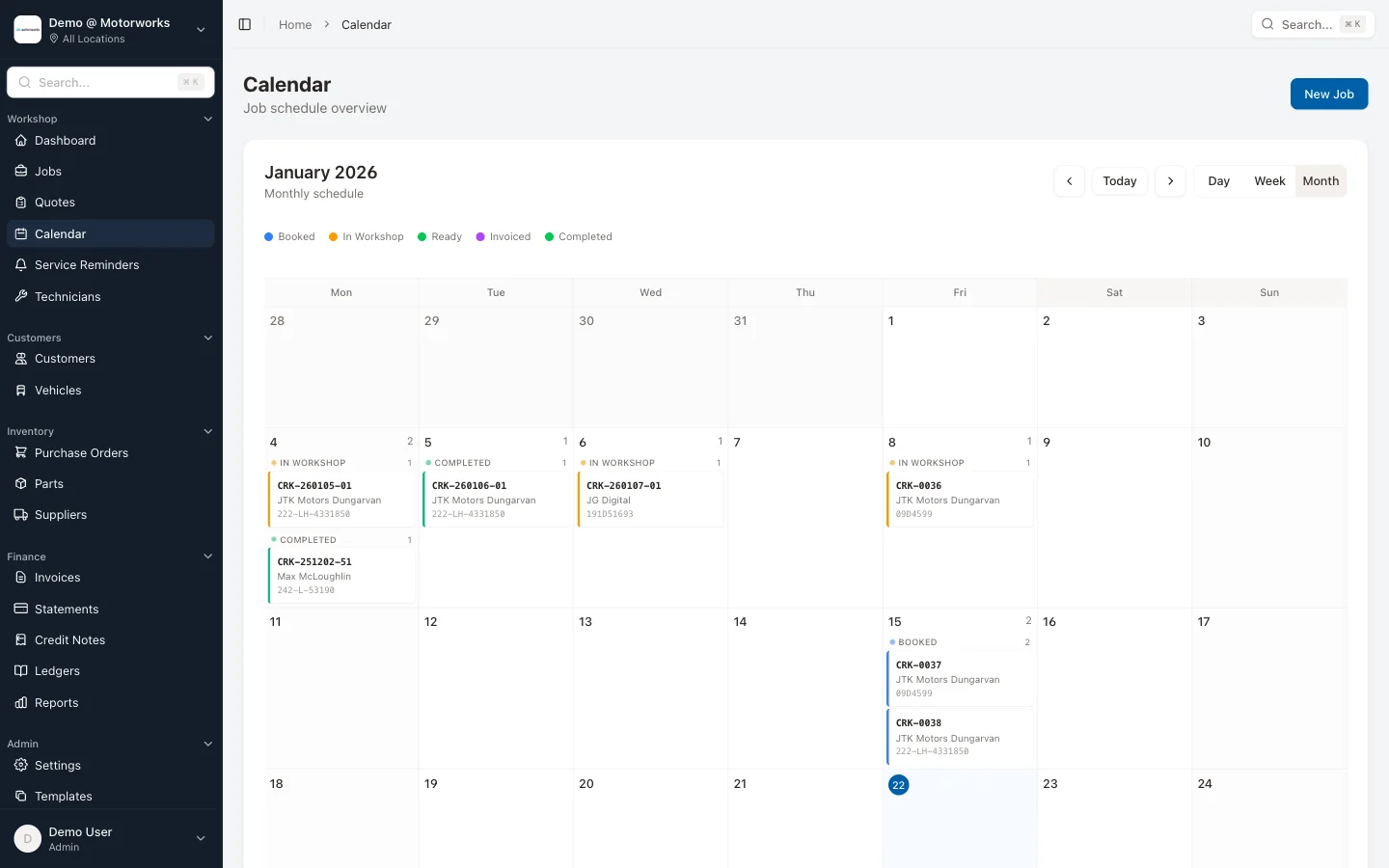
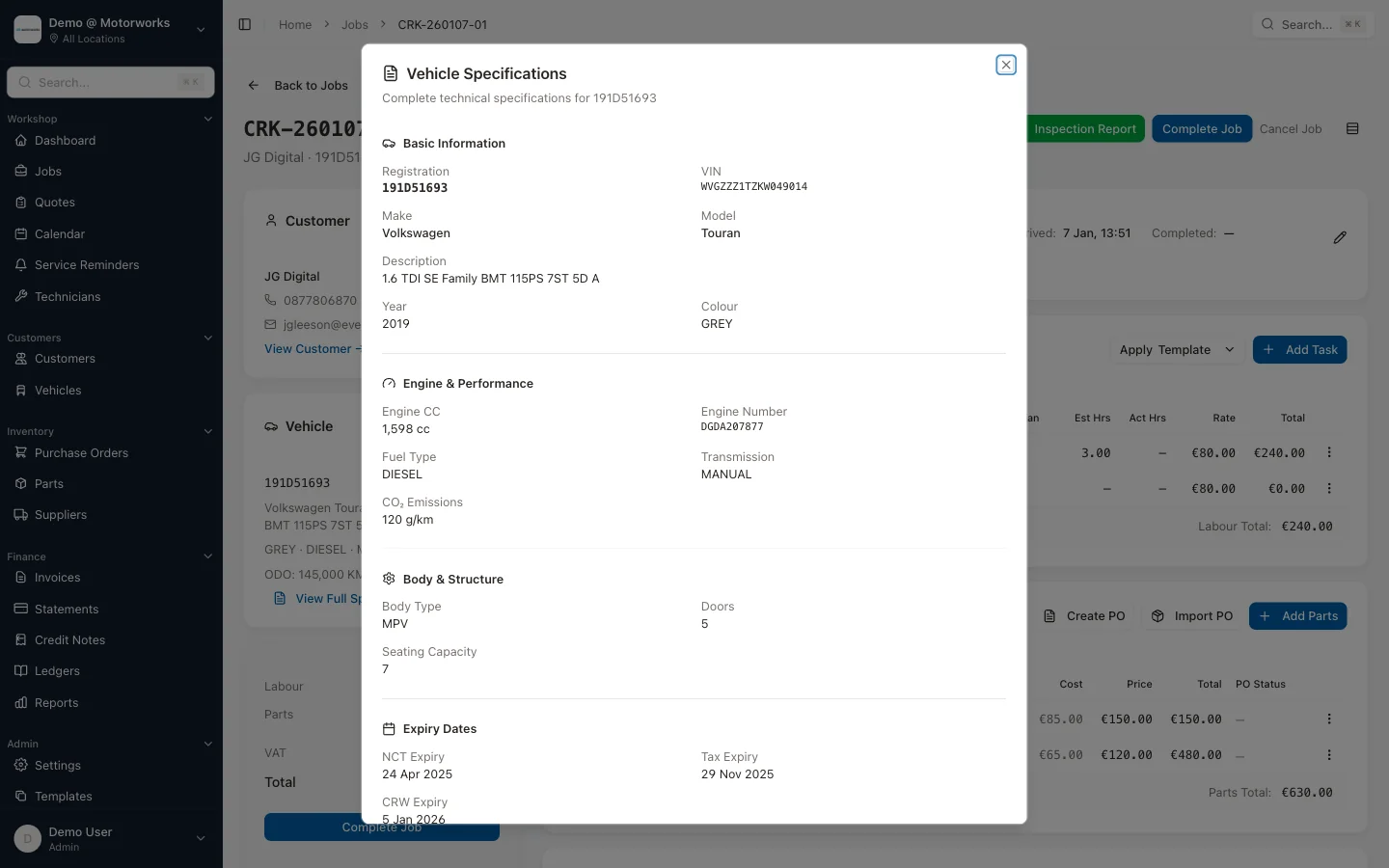
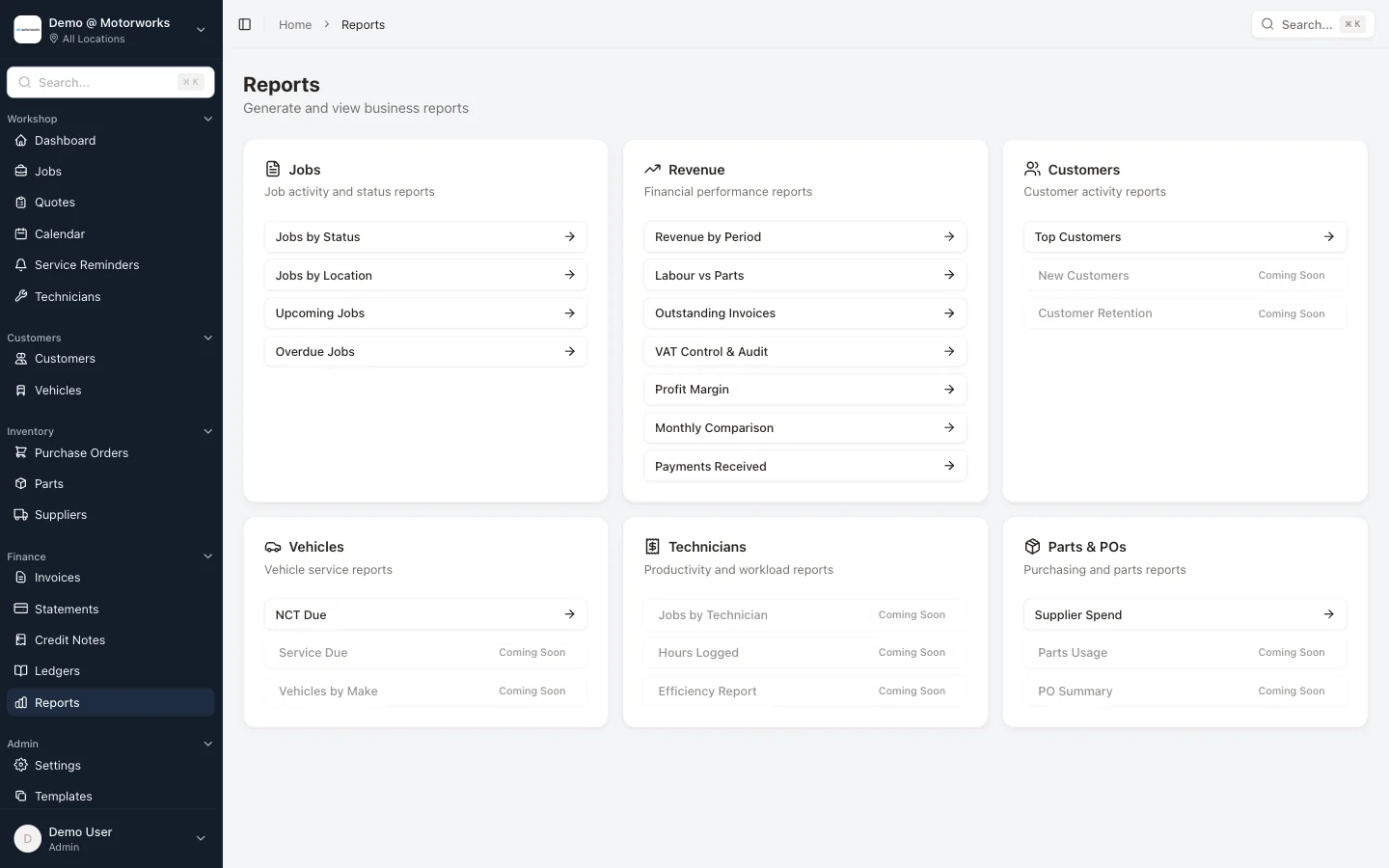
By week three or four, something clicks. The first time a customer calls and you pull up their complete vehicle history in seconds, you’ll feel it. The first time you finish invoicing on Friday afternoon instead of Sunday — because invoices generate from job cards automatically — you’ll feel it. The first time you run a profitability report and see which jobs actually made money and which bled margin on parts, you’ll feel it.
You’ll wonder why you didn’t do it sooner. This is almost universal. The garage owners who’ve made the switch rarely miss paper. They just wish they’d done it earlier.
Making the decision
Going digital isn’t about chasing the latest trend or keeping up with bigger competitors. It’s about getting your time back. It’s about not losing customers to forgotten follow-ups. It’s about finishing work at a reasonable hour instead of doing admin at the kitchen table.
If your paper system genuinely works — if you never lose job cards, never miss follow-ups, never spend weekends on invoices, and always know exactly how profitable each job is — then maybe you don’t need to change. (Not sure? Read 5 Signs Your Garage Needs Workshop Management Software, or take our free Workshop Health Check to find out where your operation stands.)
But if any of those things aren’t true, it might be time.
You don’t have to figure this out alone. MotorWorks was built specifically for independent Irish workshops — full job lifecycle management, invoicing with one-click quote conversion, purchase orders linked to jobs for real margin visibility, 15+ profitability reports, a customer portal with self-service booking, and a mobile app your technicians can use on the floor. We also support data import, so you can bring your existing customer and vehicle records with you.
If you’re curious, book a demo and let us show you how it works. No pressure, no hard sell — just an honest look at whether it makes sense for your garage. Or start a free trial and explore on your own.
If you’re ready to evaluate options, our guide to choosing garage management software walks through what to look for, and our 2026 comparison reviews what’s available in the Irish market.
Either way, the paper isn’t going anywhere. You can always go back if digital doesn’t work for you. But in our experience, nobody ever does.