You’ve been running your garage for years. Paper job cards, a worn-out desk diary, maybe a spreadsheet someone set up back in 2015 that nobody fully understands anymore. It works. Sort of. Most of the time.
But there’s a difference between “getting by” and “running well.” And sometimes the signs that you’ve outgrown your current setup are so gradual you don’t notice them until you step back and look at the bigger picture.
Here are five signs that your garage might be ready for workshop management software — and that the pain of switching would be far less than the pain of staying put.
1. You’ve lost money because of forgotten follow-ups
A customer calls in for a quote on a timing belt. You write it up, send it over, and then… nothing. They said they’d think about it. You meant to follow up on Thursday. But Thursday was chaos — a diagnostic that turned into a full day’s work, a parts delivery that went missing, and two walk-ins asking about NCT prep.
Two weeks later, you remember the quote. You call. They got it done somewhere else.
This isn’t a one-off. If you’re honest with yourself, it happens more than you’d like. Not because you don’t care, but because there’s no system to remind you. Quotes live in email or on scraps of paper. Following up depends entirely on remembering to do it.
The real cost: It’s not just the lost timing belt job. It’s the customer who might have become a regular. The referral they might have sent your way. The service work for the next five years you’ll never see.
Modern workshop management software tracks every open quote. You can see which ones need a follow-up, and convert accepted quotes to invoices in one click — no retyping. The customer can even approve quotes online through a self-service portal, so the work gets authorised while you’re elbow-deep in an engine bay.
2. You dread month-end because invoicing takes forever
Sunday afternoon. The workshop’s quiet. You’re at the desk with a stack of job cards, trying to turn them into invoices before the VAT deadline.
Some cards are clear enough. Others look like they were filled out during an earthquake. Was that a 3 or an 8? Did we charge for the diagnostic time or not? The brake pads — were they the €45 ones or the €65 ones?
Three hours later, you’re done. Maybe. You’re not entirely sure the numbers add up, but you’ve had enough and the match is starting soon.
The real cost: Beyond the lost weekend, there’s the money you’re leaving on the table. Time that wasn’t logged. Parts that weren’t charged. Labour that got rounded down because you couldn’t read the card. Then there’s the professional impression — invoices that look different every time, with inconsistent formatting and occasional mistakes.
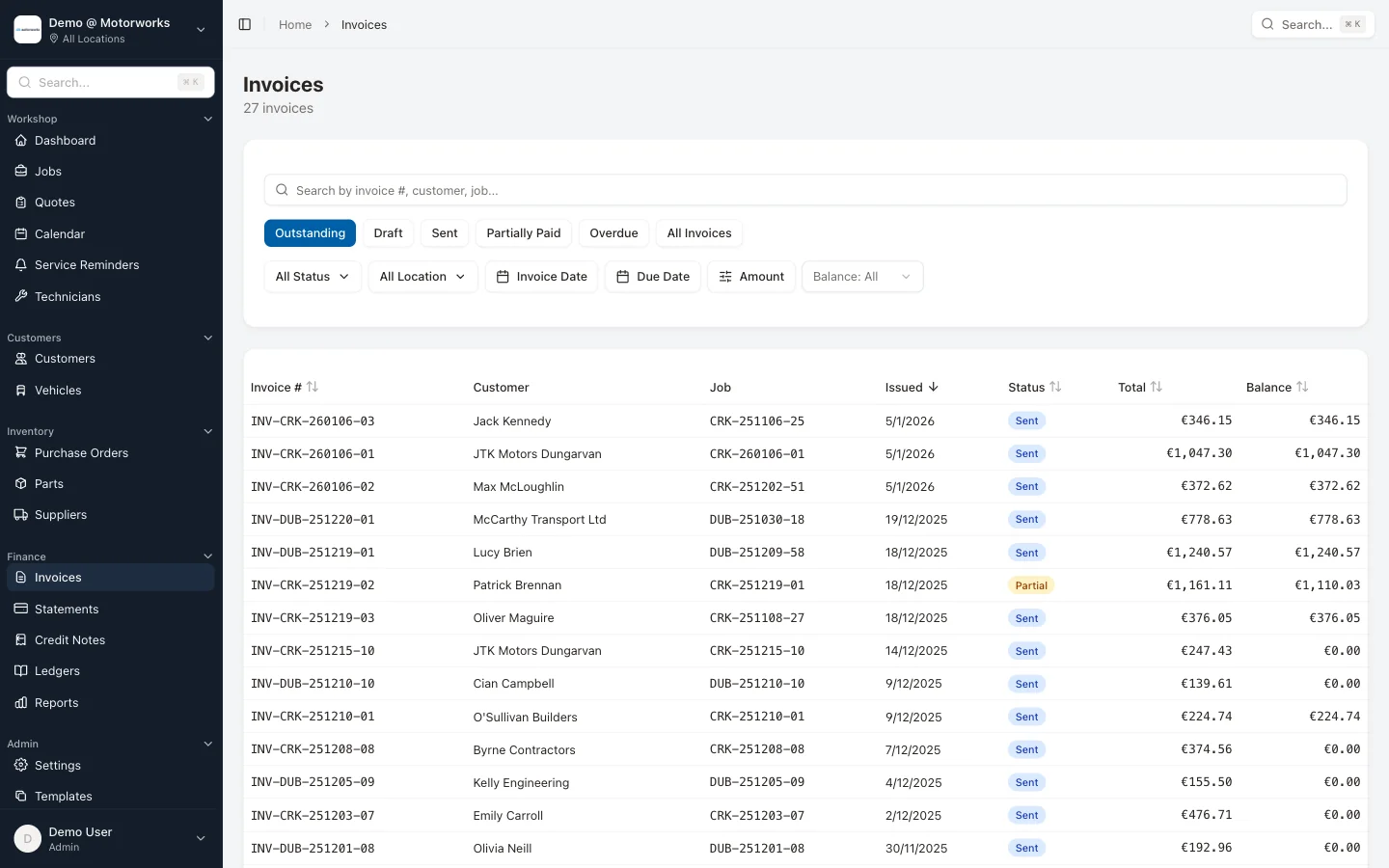
With garage software, invoicing happens as the work happens. Parts get added to the job when they’re used. Labour gets logged when it’s done. When the car’s ready, the invoice is already built — you just review and send. What took three hours on Sunday now takes three minutes on Friday afternoon.
3. Customers call asking for updates, and you have to hunt for answers
“Is my Passat ready yet?”
Simple question. Should have a simple answer. Instead, you’re putting them on hold while you shout across the workshop. “Paddy! The silver Passat — where are we with that?” Paddy’s under a lift. Can’t hear you. You walk over. He thinks the parts came in but isn’t sure. You check the parts shelf. Find two boxes but neither has a job number on them. Now you’re hunting through delivery notes.
The customer’s been on hold for four minutes. They’re not happy.
The real cost: Every interrupted phone call costs you twice. First, there’s the direct time lost — yours and whoever you pulled away from their work. Second, there’s the customer experience. They called with a simple question and got put on hold, bounced around, and given a vague answer. Next time they need work done, they might just go somewhere that seems more organised.
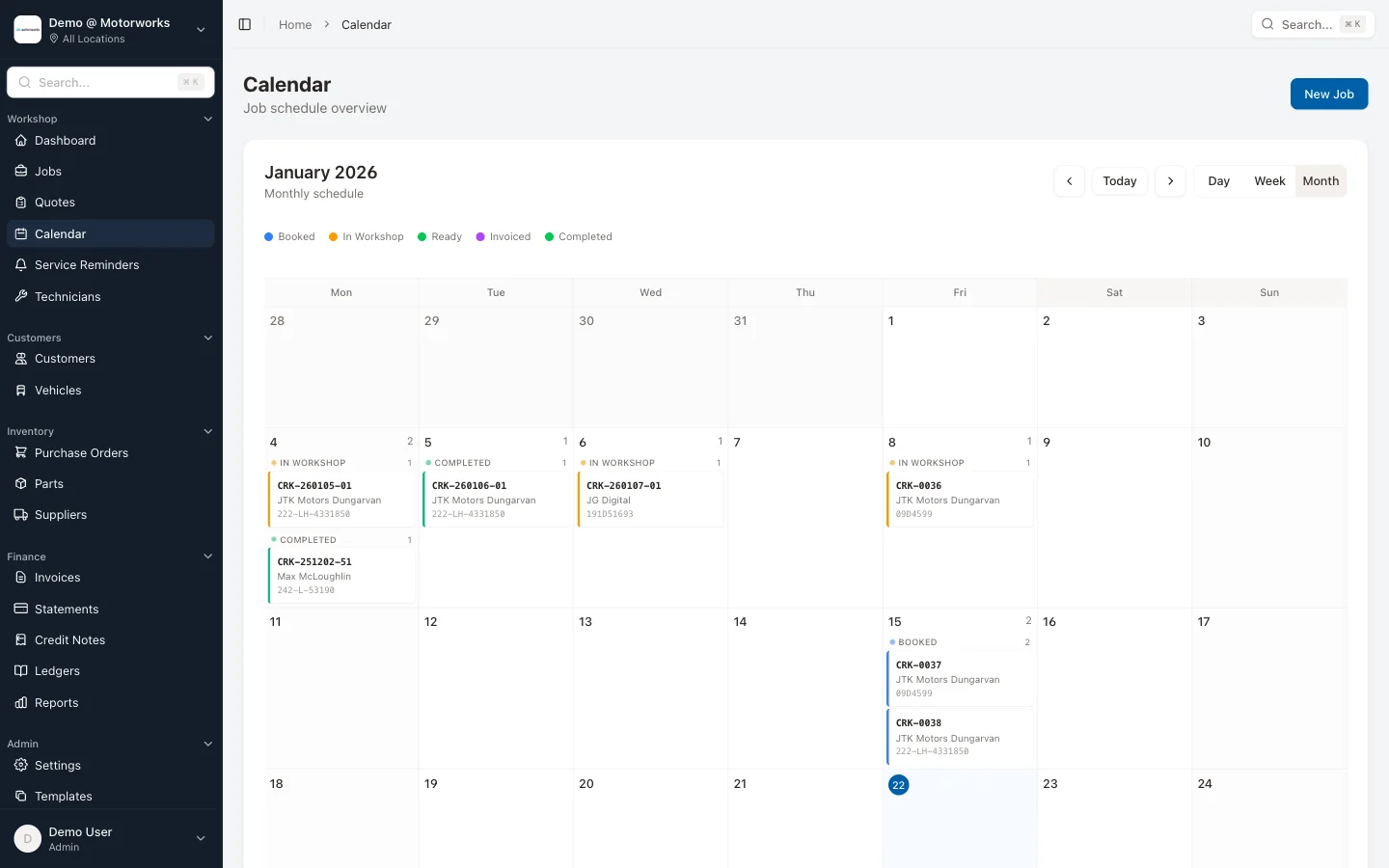
Workshop management software gives you one place to check. Type the reg, see the job, know the status. The customer gets their answer in seconds. Better yet, some systems offer customer portals where they can check progress themselves — no phone call needed.
4. You’re not sure which jobs actually make you money
Full ramps feel like success. Busy weeks feel productive. But when you check the bank balance, it doesn’t always match the effort.
That gearbox job that took two days longer than quoted? You lost money on it, but you’re not sure how much. The cheap diagnostic you did as a favour? Probably cost you more in time than you charged. The fleet customer who sends steady work — are they actually profitable, or are you subsidising them with tight margins?
You don’t know. You can’t know. Because the information needed to calculate job-level profit is scattered across parts invoices, time sheets, and job cards — none of which talk to each other.
The real cost: Without visibility into what’s actually profitable, you can’t make informed decisions. You might be quoting work too cheaply. You might be spending too much time on low-margin jobs while turning away better opportunities. You might have a technician efficiency problem you can’t see.
Garage management software tracks costs against revenue for every job. Parts cost versus parts charged. Time spent versus time billed. With purchase orders linked to jobs, you see real margins — not just revenue minus a rough guess at parts cost. MotorWorks includes 15+ reports covering profit per job, technician productivity, receivables aging, and revenue trends. Numbers replace guesses.
5. You’ve got no reliable way to bring customers back
Here’s a question: how many customers came to you once or twice in the last three years and then… disappeared?
Not because they moved away or sold their car. Just because they forgot about you. They got busy. Their NCT came due and they went to whoever Google suggested. A brake noise started and they pulled into the first garage they passed.
They weren’t unhappy with your work. They just didn’t think of you when they needed someone. (We wrote more about building a pre-NCT service pipeline that brings these customers back proactively.)
Most garages have no systematic way to stay in touch with customers between visits. Maybe you’ve got a mailing list somewhere, but when did you last use it? Maybe you’ve thought about texting customers when their service is due, but manually tracking who needs what is a job in itself.
The real cost: Acquiring new customers is expensive. Keeping existing ones costs almost nothing — if you have a system to do it. Every customer who drifts away represents years of potential work lost. Every NCT you could have prepped but didn’t. Every service that went somewhere else.
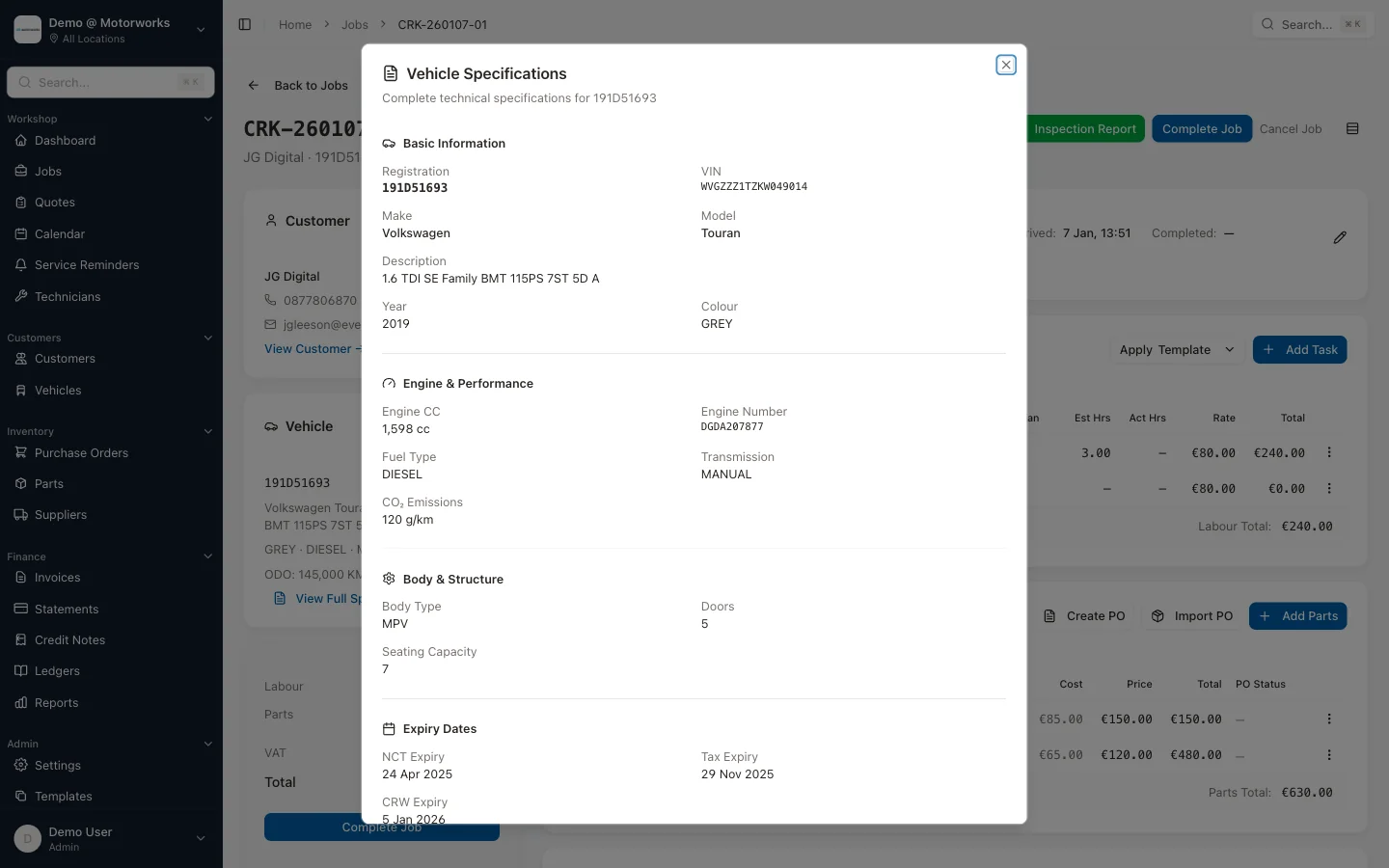
Workshop management software changes this completely. It tracks when each vehicle was last serviced and can generate a list of customers who haven’t been in for 12 months. NCT due dates come through automatically from VRM lookups, so you always know who’s coming up. Systems like MotorWorks send automated service reminders — a simple email or SMS that says “your service is due” can fill your diary without you lifting a finger. (We wrote more about this in how automated reminders drive revenue.)
Is it time to make the switch?
If you recognised your garage in two or three of these signs, you’re probably at the point where paper systems are costing you more than they’re saving. The question isn’t whether you can afford to switch — it’s whether you can afford not to.
The good news is that modern mechanic shop software has come a long way. You don’t need to spend months on implementation or hire someone to manage it. (Worried about the transition? Read our practical guide to going digital.) You don’t need a big upfront investment or a complicated training programme. The right system should feel simpler than what you’re doing now, not more complicated.
A few things to look for when you’re evaluating options (we cover these in detail in our guide to choosing garage management software):
- Built for your type of garage. Dealership software has features you don’t need and lacks ones you do. Look for something designed for independent workshops.
- Depth beyond job cards. Basic job cards and invoicing are the minimum. Look for purchase order tracking, profitability reports, customer portals, and service reminders — the features that actually change how you run the business.
- Mobile access. You’re not always at the desk. If the system only works on a desktop computer, it’s already outdated.
- Simple pricing. Per-user fees and module add-ons add up fast. Look for transparent pricing that doesn’t punish you for growing.
The transition doesn’t have to be painful. Most modern systems let you import existing customer and vehicle data. You can run the new system alongside your current process for a few weeks until you’re confident. And you can always start simple — digital job cards and invoicing first, then add features as you get comfortable.
Running a garage is hard enough without fighting your own systems. If paper and spreadsheets are holding you back, it might be time to try something different.
See how MotorWorks handles these problems or start a free trial to explore on your own terms.