A fleet-maintenance record should answer four questions without relying on the driver or technician being available: what was checked, what was found, what was done, and what remains open.
CVRT guidance places the record-keeping obligation on the commercial-vehicle owner or user, but garages create much of the supporting evidence. Clear job cards, inspection results and invoices make the operator’s file stronger and make the next workshop visit easier to manage.
The two-year requirement
CVRT says owners or users of commercial vehicles must retain detailed inspection, maintenance and repair records for at least two years after creation.
The required record set should include:
- registration number, model and year of manufacture
- hire-purchase or leasing information where applicable
- date of the last annual roadworthiness test
- maintenance details, including when, what and by whom
- reported or discovered defects
- rectification date and the person who completed it
- parts and service invoices
CVRT also says the original maintenance and repair documentation must be retained for inspection. See the current record-keeping requirements.
One vehicle, one continuous history
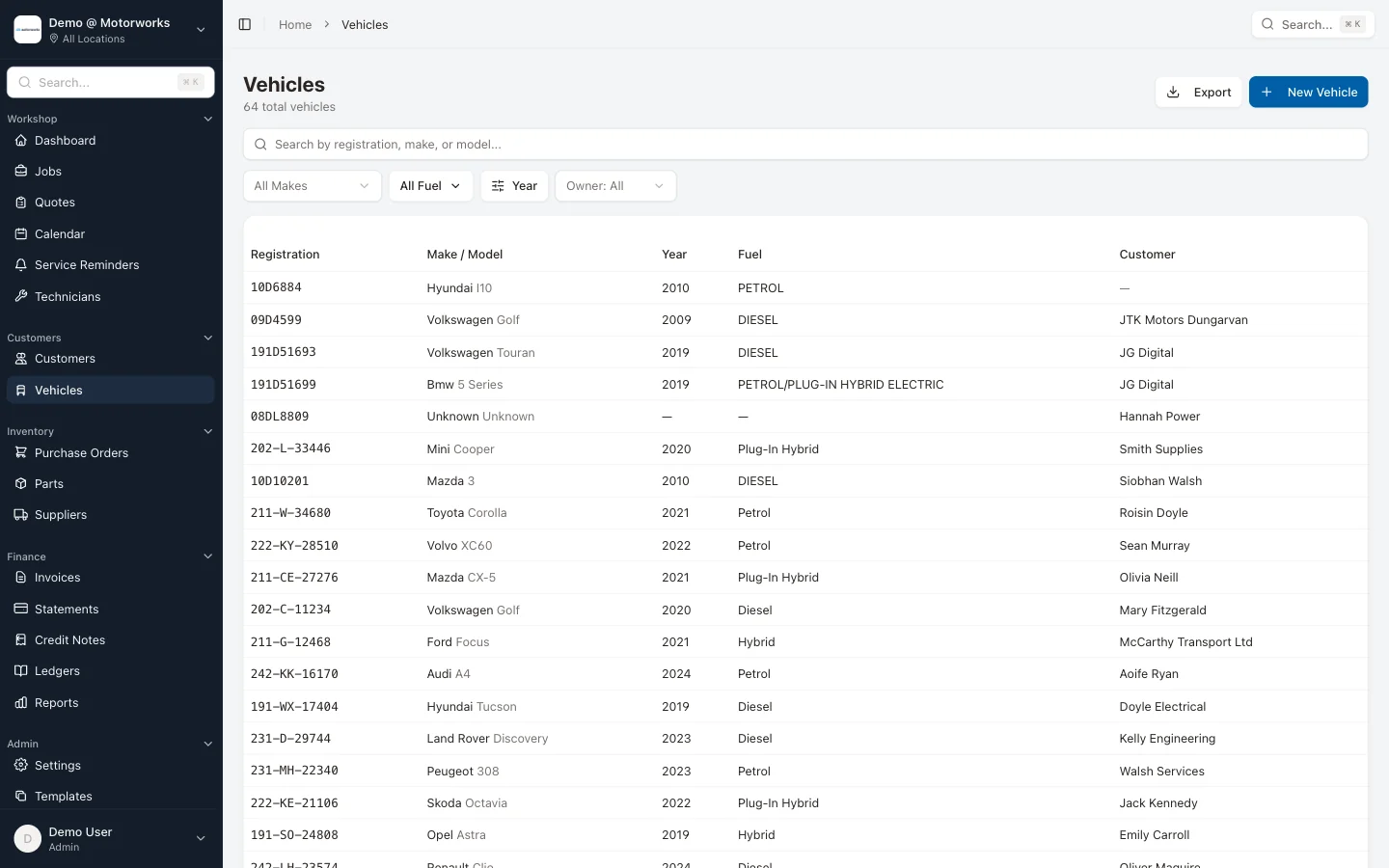
Duplicate vehicle records weaken the maintenance history. Use the registration as a strong identifier, but also retain enough vehicle detail to notice when a record has been attached to the wrong registration or operator.
At each visit, record:
- customer or fleet operator
- vehicle registration and relevant fleet identifier
- make, model and vehicle class
- odometer reading
- date in and date out
- driver-reported concern
- work requested by the authorised contact
- technician or external provider responsible
If a vehicle changes owner or fleet, preserve the business’s lawful historical record while applying its access and retention policy. Do not merge unrelated customer histories merely because the registration is familiar.
Inspection record
The inspection record should identify the checklist used and the result for each item. A practical structure includes:
- checklist name and version
- inspection date and time
- odometer
- inspector
- pass, advisory, fail or not-applicable outcome
- defect description
- measurement, note or image where relevant
- proposed rectification
- fitted price and VAT treatment where quoted
A photograph can support a finding, but it does not replace the written description. File names such as IMG_4892 are not useful defect records on their own.
Motorworks vehicle inspections keep checklist results, supporting media, fitted prices and follow-up dates connected to the vehicle and job.
Defect report
CVRT’s daily walk-around guidance says a reported defect should include:
- description of the defect
- date and time it was discovered
- any temporary mitigation taken
The guidance says defects should be followed up and the action taken recorded. The defect record therefore needs a lifecycle rather than a checkbox.
Useful statuses are:
- reported
- assessed
- repair authorised
- repair declined or deferred
- rectified
- independently verified where the operator requires it
Retain who changed the status and when. Never close a defect merely because the related job has been invoiced.
Rectification record
The repair entry should refer back to the defect and state:
- work completed
- date completed
- technician or provider
- parts fitted
- relevant measurements or test results
- whether a temporary measure was replaced by a permanent repair
- any work still outstanding
If the workshop cannot perform a specialist operation, record the referral or external service rather than implying it was completed in-house.
Parts and service invoices
The invoice is part of the maintenance evidence, so descriptions should identify the work and vehicle clearly. Include customer purchase-order or cost-centre references where required, but do not let an internal code replace the description of the repair.
Connect supplier and stock records where possible:
- supplier invoice and item
- goods receipt
- part issued to the vehicle job
- returned or unused quantity
- customer invoice line
This supports both maintenance history and cost control. The parts, purchase orders and stock guide explains the operational chain.
Planned maintenance record
CVRT says operators should be able to demonstrate scheduled maintenance, inspections and repairs intended to prevent roadworthiness problems. A plan may include:
- service intervals
- safety inspections
- CVRT and certificate dates
- tachograph work where relevant
- open advisories
- parts already ordered for planned work
- next booking and responsible contact
Keep the planned date, completed date and reason for any change. Replacing an overdue date with a later one hides the exception instead of managing it.
Garage-to-operator handover
At collection or digital handover, provide a record the fleet contact can use. Depending on the work, this may include:
- completed job card
- inspection or defect report
- rectification detail
- invoice and supporting files
- list of declined or deferred items
- next planned date
Agree the delivery channel and recipient for each fleet account. Sending a commercial-vehicle report to the driver’s personal address because it was easiest can create both operational and data-protection problems.
Monthly record review
For regular fleet customers, review:
- vehicles with no upcoming planned date
- open safety-related defects
- deferred work past its follow-up date
- maintenance jobs without a completion note
- invoices without adequate repair descriptions
- duplicate vehicle records
- records approaching the garage’s retention threshold
The operator remains responsible for its compliance, but a garage that supplies complete evidence is easier to work with and less likely to receive frantic requests for old paperwork.
Motorworks connects vehicle history, inspections, jobs, parts, invoices and CVRT due dates. Book a demo to test the record using one commercial vehicle and a realistic defect-to-repair workflow.
Official sources
Reviewed against the linked CVRT guidance on 2 September 2026. Operators should confirm any additional requirements for their fleet, licence and vehicle classes.