Commercial-vehicle customers need more than a reminder that a test is due. They need records showing what was inspected, what defects were found, when repairs were completed and who completed them.
A garage can provide valuable preparation and maintenance work without presenting itself as the official test provider. The distinction should remain clear on quotes, job cards and customer communications: a pre-CVRT inspection is workshop work, while the statutory CVRT is conducted through the authorised testing system.
This guide focuses on the record and workflow side of commercial-vehicle maintenance. It does not replace RSA or CVRT guidance.
What the operator must be able to show
CVRT guidance says the owner or user of a commercial vehicle must keep detailed inspection, maintenance and repair records for at least two years after their creation.
The published list includes:
- vehicle registration, model and year of manufacture
- hire-purchase or leasing information where applicable
- the date of the last annual roadworthiness test
- details of maintenance, including what was done, when and by whom
- defects reported or discovered
- when each defect was rectified and by whom
- parts and service invoices
The recording system may be paper-based or electronic, but the operator must retain the original documentation relating to maintenance and repairs for inspection. Read the official CVRT record-keeping requirements.
Those are obligations on the operator, but the garage supplies much of the evidence. A vague invoice saying “CVRT work” is poor support. A dated job record with inspection findings, authorised repairs, fitted parts and technician details is far more useful.
Treat each vehicle as a continuing record
Commercial fleets return repeatedly, sometimes to different staff or locations. Keep the vehicle identity stable across every visit so the history remains coherent.
A practical vehicle record includes:
- registration and core vehicle details
- owner or operator account
- odometer reading at each visit
- CVRT and certificate-of-roadworthiness dates where recorded
- inspections and defect reports
- repair jobs and related invoices
- parts, attachments and technician notes
- deferred defects and planned follow-up dates
This history helps reception answer ordinary questions without opening six PDFs. It also reduces the risk of a deferred defect disappearing when a driver, fleet contact or service adviser changes.
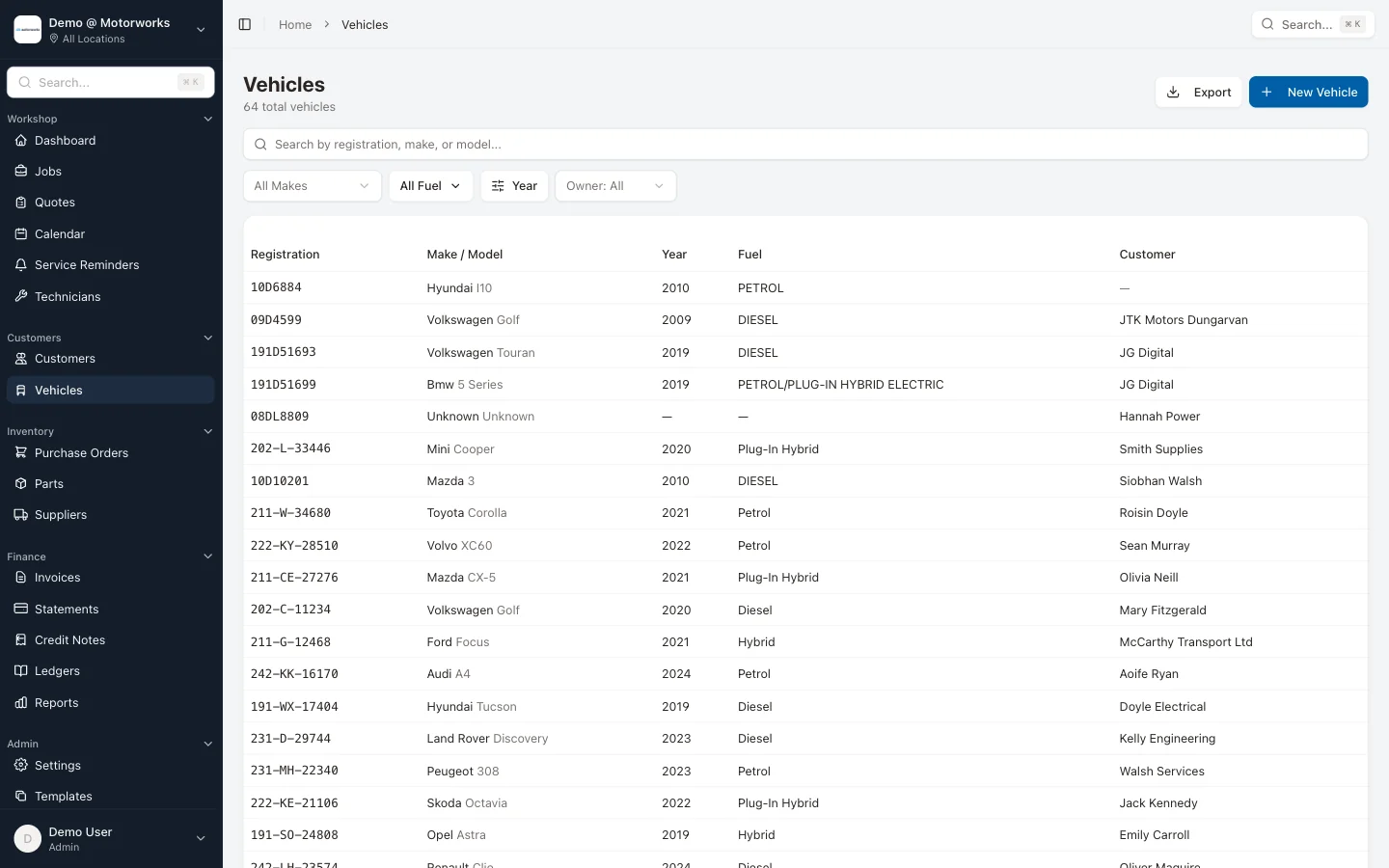
Motorworks vehicle history keeps jobs, invoices, inspection records and files connected to the vehicle. Its NCT and CVRT tracking stores due dates and makes upcoming dates visible to staff.
Build a repeatable inspection process
A pre-CVRT inspection should use a consistent checklist appropriate to the vehicle class and the work the garage is qualified and equipped to perform. The checklist is not a promise that the vehicle will pass. It is evidence of what the workshop inspected at that time.
For each check, record:
- the item inspected
- pass, advisory or fail outcome
- a clear description of any defect
- supporting notes or photographs where useful
- the proposed repair and fitted price
- customer approval or deferral
- a follow-up date where the work is not completed
Motorworks digital vehicle inspections support pass, advisory and fail outcomes, fitted pricing, follow-up dates and conversion of approved defects into estimates or jobs. A garage should configure inspection templates for the vehicles and services it actually handles.
Record defects in enough detail to act
CVRT’s daily walk-around and defect guidance says an identified defect record should include:
- a description of the defect
- the date and time it was discovered
- any temporary measure taken to mitigate it
The guidance also says all defects should be followed up and the action taken should be recorded. If a defect may endanger the vehicle or other road users, the driver should stop at a safe location and not continue until it has been inspected and, where necessary, repaired by a suitably qualified person.
For the workshop, “check brakes” is not a useful defect description. Record the location, condition and measured information available, then record the rectification separately. This preserves the difference between finding a fault and closing it.
Link approval, repair and invoice
A strong commercial-vehicle record makes this chain visible:
- The driver or operator reports a concern, or the garage finds a defect.
- The garage documents the finding and proposed work.
- The authorised fleet contact approves, declines or defers it.
- The technician completes the approved repair.
- Parts, labour and outside services are recorded against the job.
- A completion note identifies what was rectified and by whom.
- The invoice reflects the completed work.
If the operator declines an advisory item, keep the decision and follow-up date. Do not silently mark the defect closed because the current invoice has been paid.
Plan maintenance separately from the annual test
The annual test date is one milestone, not the maintenance plan. CVRT guidance expects operators to show scheduled maintenance, inspections and repairs intended to prevent roadworthiness problems.
For a garage managing fleet work, a useful schedule can include:
- planned services and safety inspections
- CVRT and certificate dates
- tachograph checks where relevant to the vehicle and provider
- recurring fleet-agreement work
- open advisories and promised follow-up dates
- parts lead time for planned repairs
Keep test-date reminders distinct from electronic marketing. A customer communication about an existing booking or requested maintenance can have a different purpose from a campaign promoting services. The garage service reminders and GDPR guide explains the distinction and the need to respect objections.
Make fleet invoices easy to reconcile
Fleet customers often need references beyond the vehicle registration. Agree the required fields during account setup, such as purchase-order number, cost centre, driver name or fleet authorisation reference.
The invoice should still describe the actual parts and services. The operator’s accounts team needs a financial document; its transport manager needs evidence of maintenance. One well-structured record can serve both purposes without reducing the description to an internal code nobody else understands.
For more detail on the supporting record set, read our commercial-vehicle maintenance records guide.
A practical handover pack
At vehicle collection, the garage should be able to provide or retain:
- the original reported concern or inspection request
- the completed inspection result
- the defect and rectification record
- authorisation for additional work
- the final job description
- parts and service invoice
- any remaining advisory work and follow-up date
This is useful whether the vehicle passes its next test or not. A CVRT is a point-in-time roadworthiness test; it is not a warranty on earlier preparation work, and the garage should not market it as one.
Motorworks brings commercial-vehicle records, inspections, jobs, purchasing, invoices and test dates into the same workspace. Book a demo to walk through a fleet vehicle from reported defect to completed repair.
Official sources
Reviewed against the linked official guidance on 2 September 2026. Operators and garages should use current RSA and CVRT guidance for their vehicle classes and circumstances.