You drop your car in at 8:30am. You walk home, get into work, and by lunchtime you’re wondering: has the garage had a chance to look at it yet? Is it going to be ready today? Did they find anything else while they were at it?
So you call. You get the engaged tone. You try again twenty minutes later. Someone answers, puts you on hold, comes back with a partial answer. You hang up not entirely sure what’s happening with your car.
This is such a normal experience that most car owners don’t even register it as a problem. It’s just what going to the garage is like.
But it doesn’t have to be. And increasingly, it won’t be — because the garages that figure this out are earning the kind of loyalty that’s very hard for competitors to undercut.
What customers actually want (and rarely get)
Car owners aren’t looking for anything complicated. They just want the same basic digital convenience they already have with every other service in their life.
They can check their bank balance at midnight. They can see their GP appointment in an app. They can track a parcel from warehouse to doorstep in real time. They can pull up a dental invoice from three years ago in thirty seconds.
Then they need to deal with their garage, and suddenly it’s 2005 again. Phone calls during business hours. Paper invoices that end up stuffed in a glove box. No record of what was done, when, or why.
The gap between what customers experience everywhere else and what they experience at many garages is significant. For the garages that close that gap, it becomes a genuine competitive advantage.
Here is what car owners actually want from their garage — and why each one matters more than it might seem.
A complete record of their car’s service history
Most car owners couldn’t tell you off the top of their heads when their last service was, what was done, or what the garage recommended keeping an eye on. Not because they don’t care about their car, but because the information was never really in their hands in the first place.
The invoice went into a folder. Or a drawer. Or the recycling by accident. The garage has a record, but the customer can’t access it. So every time they come back, they’re starting from scratch — and so are you.
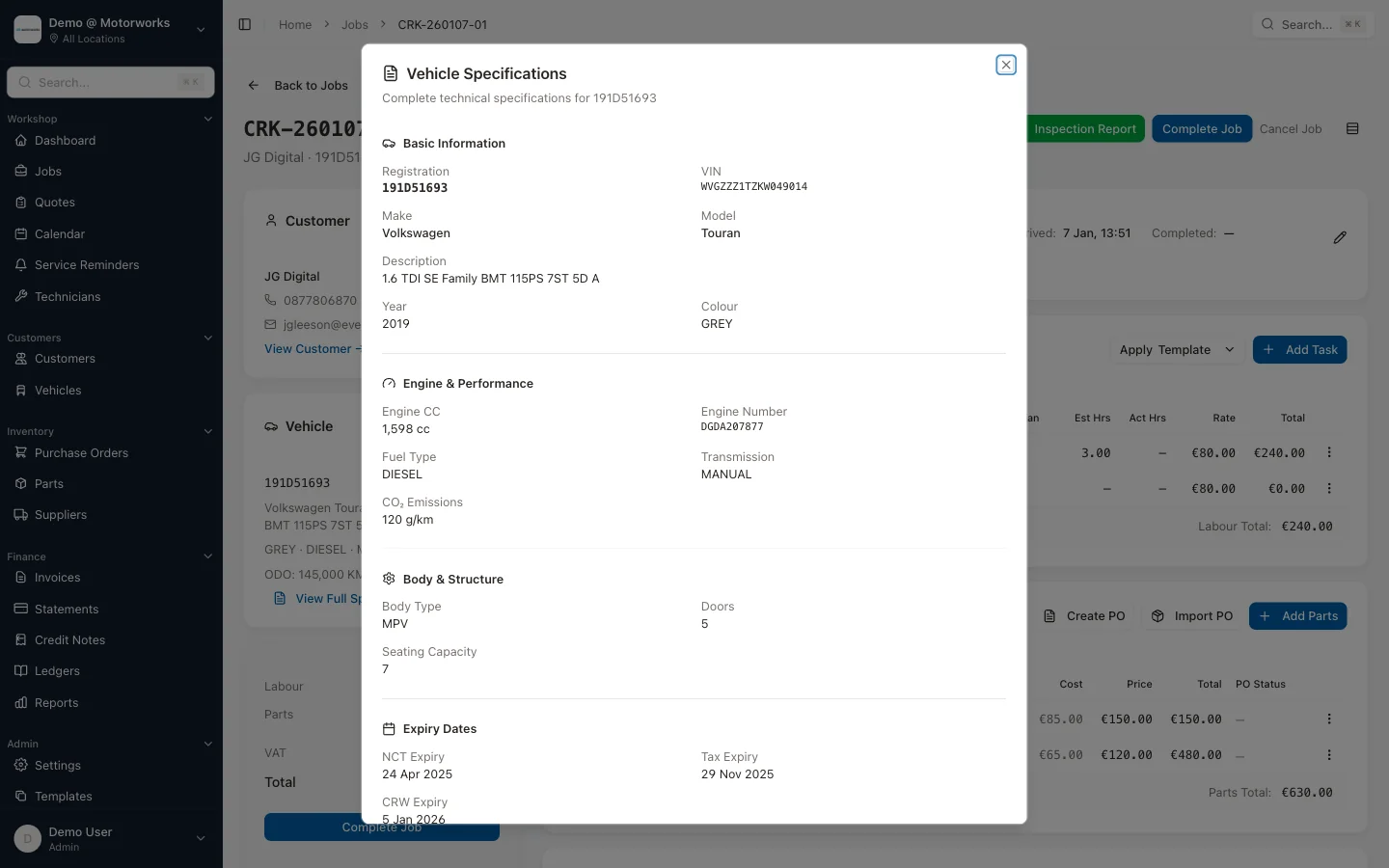
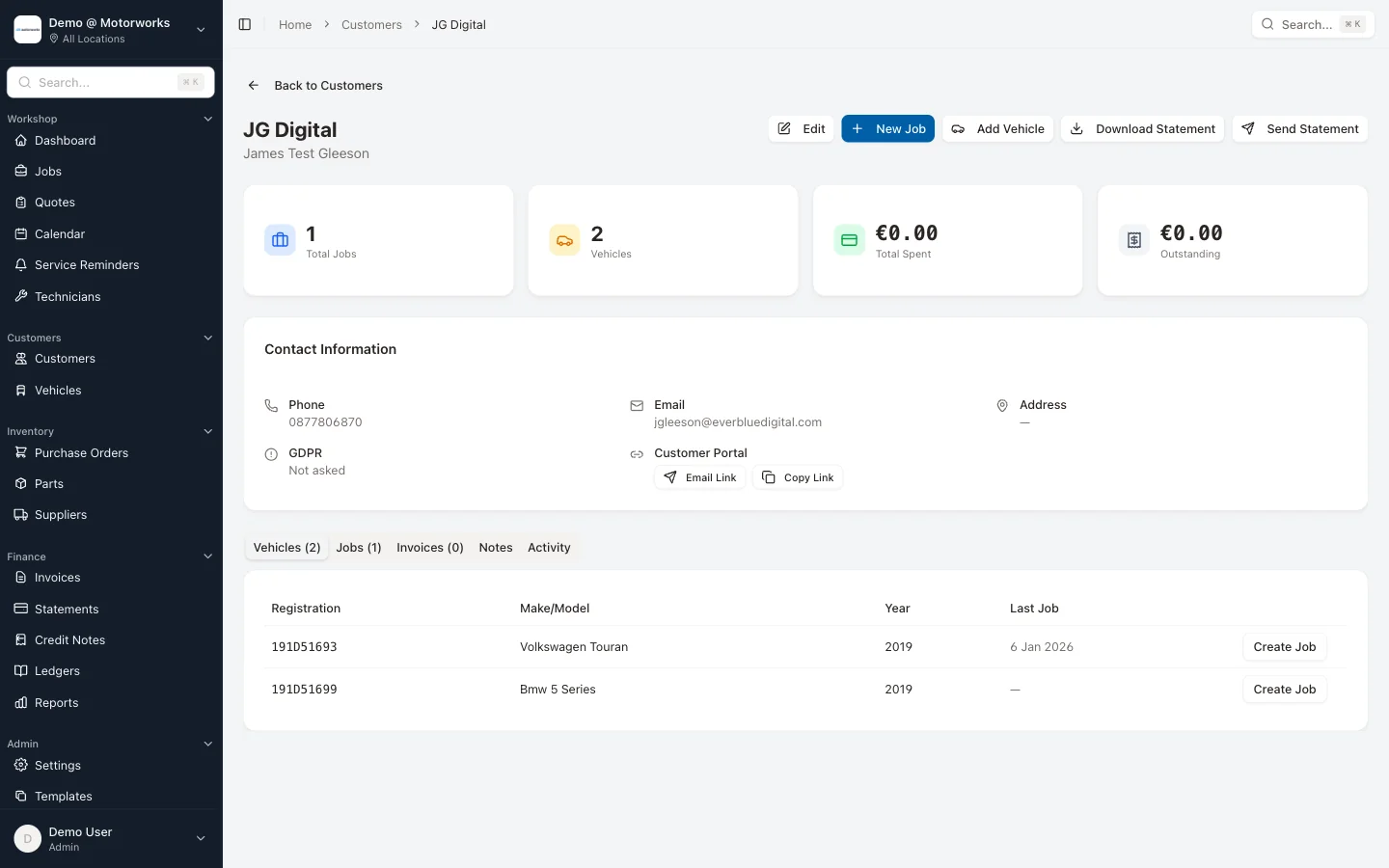
A customer portal changes this fundamentally. The customer logs in with their phone number — a one-time code, no password to remember or reset — and everything is there. Every service, every repair, every inspection report, accessible on a phone or laptop at any time. They can see exactly what was done to their car in April 2024, what mileage it was done at, and what the notes said.
This matters more than it sounds. A customer who can see their full vehicle history online is a customer who trusts that your records are thorough. They’re not going to go looking for a second opinion because they feel uninformed. They know what’s been done, and they know you know too.
There’s also a practical benefit for you. When that customer comes in, you’re not starting a conversation from zero. You have the complete history in front of you. You can spot patterns, flag upcoming items, and have a more useful conversation about what the car actually needs.
Clarity on upcoming appointments
Ask most car owners when their next service is booked and you’ll get some combination of guessing and uncertainty. They know they made an appointment. They think it was for next month. Or was it the month after?
The garage knows exactly when the booking is. But the customer is working from a text message they half-remember or a slot written in a notebook they can’t find.
When customers can log in and see their upcoming appointments clearly — date, time, what it’s for — it reduces missed bookings, reduces the number of “just checking” phone calls, and makes customers feel like they’re dealing with a professional operation rather than fumbling around in the dark.
Even better: when a customer receives a service reminder, they can follow the link, log in with their phone number, and book their next appointment directly through the portal. No phone call needed, no waiting for business hours. The booking flows straight into your schedule.
This also matters when life gets complicated. A customer who needs to reschedule can see at a glance what they’ve got booked, make a decision, and sort it out — instead of calling during your busiest hour to ask what day their appointment was on.
Access to invoices without having to ask
This one sounds small, but it matters a lot in practice.
Car owners frequently need to look up invoices. Insurance claims. Warranty disputes. Selling the car and wanting to show service history to a buyer. Claiming back VAT if they use the car for business. Just checking what something cost last time before they agree to it again.
With a paper invoice in a folder — if they still have it — they might find it. If it’s been more than a year, the chances drop. And if they need you to resend it, that’s time spent on both ends for something that should take ten seconds.
A customer who can pull up any past invoice from their phone in thirty seconds is a customer who will not find dealing with your garage to be a source of low-grade frustration. That matters. The small frictions that customers barely notice individually add up to an impression. And impressions drive whether someone books with you again or quietly tries somewhere new.
The invoicing side of a customer portal also reinforces transparency. The customer can see the breakdown of parts and labour at any time, not just in the moment when they’re picking up their car and in a hurry. When the numbers are always accessible, there’s less room for doubt to creep in later.
Being able to approve quotes without a phone call
This is the one that surprises garage owners the most, because it seems like it should make the process more complicated.
It doesn’t. It makes it significantly easier.
The current process: you find something while servicing the car, you write up a quote, you ring the customer, they don’t answer, you leave a voicemail, they call back when you’re on the ramp, someone takes a message, they call again, you talk to them for five minutes, they say they need to think about it, you never hear back.
That’s not unusual. That is the normal process for many garages, repeated multiple times a day.
A digital quote that lands in a customer’s portal changes this. They log in with a one-time code on their phone — no app to download, no account to create — and read the quote properly, at a time that suits them, without being put on the spot. They can see exactly what the work is, what it costs, and why it’s needed. They approve or decline with a tap. You get a notification and can plan accordingly — and the approved quote converts to a job with one click on your side.
Customers who can read a quote at their own pace are more likely to approve it than customers who are being asked to make a decision on the fly, on the phone, while they’re in a meeting. There’s less pressure, more information, and a cleaner process on both sides.
It also means fewer misunderstandings. When the customer approved the quote in writing, there’s no ambiguity about what was agreed to. Everyone is looking at the same document.
Knowing where their car is in the process
This is the one that maps directly to the experience described at the top of this post. The customer drops their car in at 8:30am and wants to know: has it been looked at? Is there a problem? Will it be ready today?
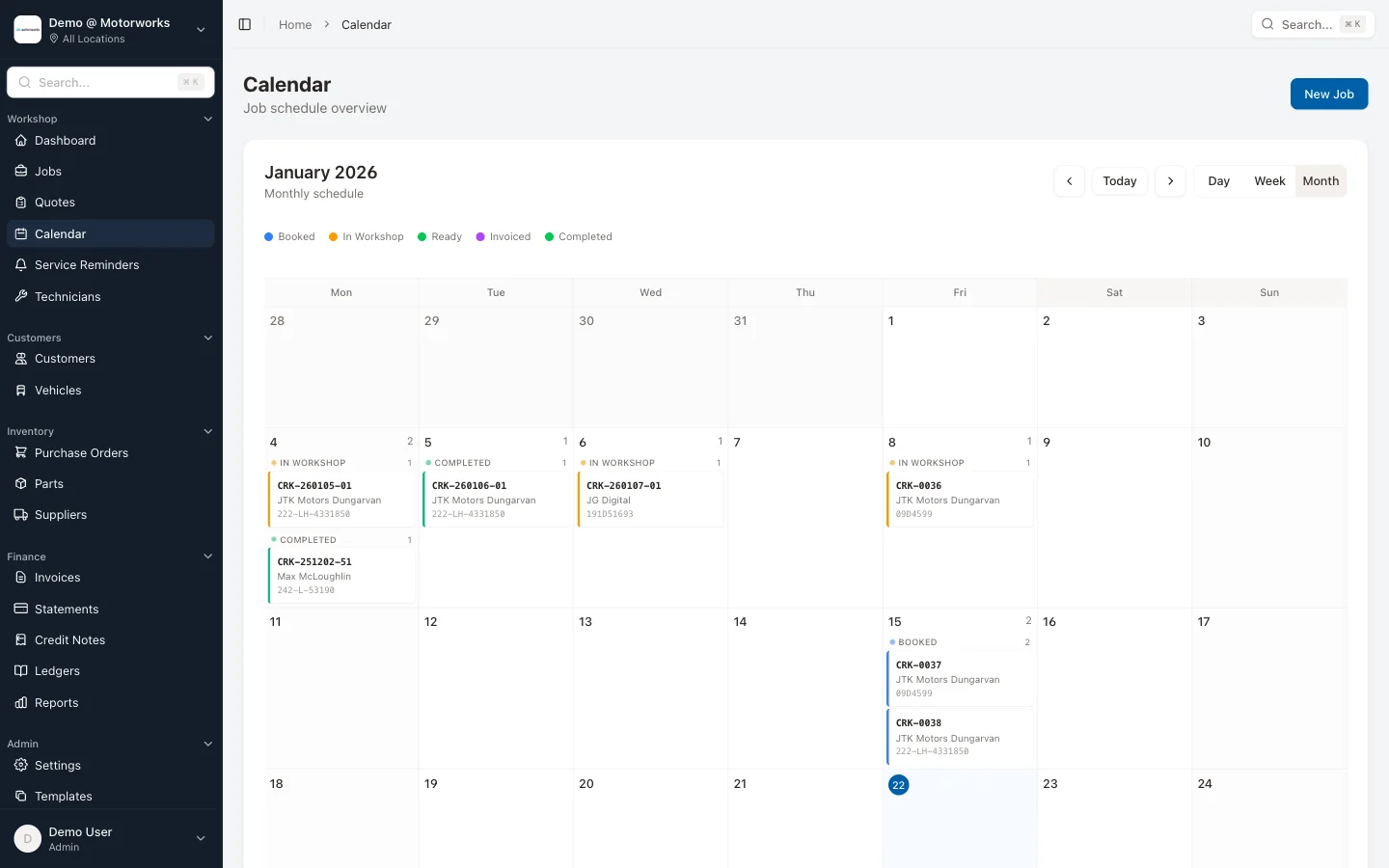
When jobs in your workshop move through clear statuses — booked, in workshop, ready for collection — and those statuses are visible to the customer through the portal, the “just checking” phone calls largely disappear. The customer can see that their car is being worked on, or that it’s ready to collect, without having to interrupt your workshop.
This is a direct reflection of how job management works in MotorWorks. As jobs move through their lifecycle — from booked to in progress to completed — the customer sees the current status. When the car is ready, they know. No phone call, no chasing.
Updating their own contact details
This one is almost embarrassingly simple, but it’s worth including because it causes so much friction in practice.
Customers move house. They get new phone numbers. They change email addresses. And nine times out of ten, they don’t think to tell their garage. So you’re sending reminders to an old number. Service history is under an address they haven’t lived at in three years. The email with their invoice is going to an account they never check anymore.
When customers can update their own contact details through a portal, your records stay accurate without you having to manage it. It’s one less administrative task, one fewer source of miscommunication, and a small signal to the customer that dealing with you is easy and modern.
It sounds trivial. Over the course of a year, across hundreds of customer records, it isn’t.
Why this matters for your garage
Everything above is written from the customer’s perspective, because that’s the point. But let’s be direct about what it means for retention and growth.
Customers who feel well looked after don’t shop around. It’s not that they become immune to a better price somewhere else — it’s that the bar for switching gets higher. When they can see their full service history, when their invoices are always accessible, when dealing with you is frictionless, the switching cost goes up. There has to be a compelling reason to start from scratch with an unfamiliar garage.
Customers who feel poorly informed or who find the experience frustrating don’t always complain. Often they just quietly book somewhere else next time. If you’ve read our post on handling negative Google reviews, you’ll know that the customers most likely to leave a bad review are the ones who felt ignored or out of the loop. A customer portal is, among other things, a prevention strategy.
There’s also the differentiation angle. Most independent garages in Ireland are not offering this kind of digital experience. The ones that are stand out, and not in a complicated way — they just look more professional, more organised, and more trustworthy than the competition. If you’re still weighing up the move from paper-based systems, our guide to going digital for garage owners covers the practical steps.
The experience your customers are comparing you to
It’s worth sitting with this for a moment.
Your customers aren’t comparing you to other garages. They’re comparing you to every other service they interact with digitally. Their bank. Their GP. Their broadband provider. Their insurance company.
When all of those experiences are smooth and self-service, and then they have to call three times to find out if their car is ready — the gap is noticeable. Even if they don’t articulate it that way. Even if they’re not consciously unhappy with you.
The garages that understand this are building something that lasts: a customer experience that matches the expectation customers already have from the rest of their lives. That’s not a luxury. It’s increasingly the baseline.
The bottom line
Car owners want to feel informed, in control, and like they’re dealing with a garage that takes their time seriously. A customer portal delivers all of that — service history at their fingertips, upcoming appointments they can check any time, invoices always accessible, quotes they can read and approve without a phone call, and the ability to keep their own details up to date.
None of this is complicated to offer. But the garages that offer it are building customer relationships that are genuinely hard to lose.
Want to see how a customer portal works in practice? MotorWorks includes a full customer portal with OTP login (no passwords), self-service booking, quote approval, complete vehicle history, and online invoicing — all in one platform built for Irish garages. Book a demo and we’ll walk you through it.